Health, Science & Nutrition
The Australian Beverages Council Limited (ABCL) leads and supports a range of industry initiatives, programs…
Read More
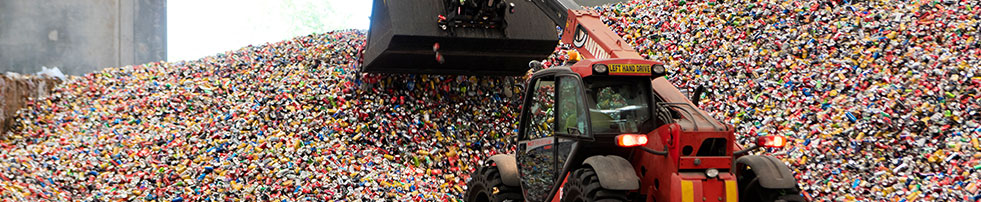
The Australian Beverages Council actively monitors and responds to emerging environmental and public health issues relevant to the beverage sector, including Per- and Polyfluorinated Substances (PFAS) and microplastics.
Per- and Polyfluorinated Substances (PFAS) are a large group of widely used chemicals that have been a growing focus for many governments and stakeholders in recent years. These chemicals have been used for decades in a variety of products because they are non-stick, waterproof, flame-retardant, and heat-resistant. They are also commonly referred to as “forever chemicals” due to their persistence in the environment.
Due to their widespread use and long-lasting nature, PFAS are now present at trace levels throughout the environment, including in air, soil and water. At elevated levels, PFAS can accumulate in the environment and in humans and animals over time.
In response to increased attention on PFAS, particularly in soil and groundwater around military and commercial airports, the Australian Beverages Council has implemented the following:
These actions help ensure consumers are protected and that industry maintains high technical, safety and sustainability standards for its products.
Further information:
FSANZ work on PFAS
Australian Centre for Disease Control
NHMRC Review of PFAS in Australian drinking water
Microplastics are plastic particles smaller than 5 mm. They are widespread in the environment and have been detected in marine and fresh water, wastewater, food, air and drinking water. Nearly two-thirds of microplastics released into the environment are linked to washing synthetic textiles and wear from vehicle tyres.
Microplastics are an emerging issue that the beverage industry takes seriously. The Australian Beverages Council recognises that more research is needed and continues to monitor new scientific evidence and guidance from Australian and international authorities.
Scientific authorities, including the UN Food and Agriculture Organization and the World Health Organization, state that there is currently no reliable evidence that microplastics pose a risk to human health. However, authorities and industry agree that further research is required to better understand potential impacts.
Reflecting growing public interest and remaining knowledge gaps, the European Parliament has asked the European Food Safety Authority (EFSA) to assess the potential health risks of microplastics in food, water and air. EFSA’s scientific opinion, expected by the end of 2027, will help advance understanding in an area where scientific uncertainty remains.
The beverage industry supports evidence-based policy development and continues to engage with regulators and monitor the latest scientific research.
Further information:
FSANZ | Microplastics in Food
Australian Institute of Marine Science | Marine Microplastics
WHO | Dietary and inhalation exposure to nano- and microplastic particles and potential implications for human health
The Australian Beverages Council Limited (ABCL) leads and supports a range of industry initiatives, programs…
Read MoreRegulation of Bottled and Packaged Water All Members of the Australasian Beverages Council Limited…
Read MoreThe Australian Beverages Council Limited (ABCL) supports balanced consumption of food and drinks for health…
Read MoreThis page is dedicated to generating consumer awareness about some ingredients found in non-alcoholic beverages…
Read MoreMembers of the Australian Beverages Council have committed to ensuring that marketing and advertising communications…
Read MoreThe Australian Beverages Council actively monitors and responds to emerging environmental and public health issues relevant…
Read MoreElectrolyte drinks are regulated by the Food Standards Code. Beverages which are marketed as electrolyte…
Read MoreThe Australian Beverages Council fully supports the Health Star Rating (HSR) system and has been…
Read MoreThe Australian Beverages Council supports greater understanding of what constitutes a balanced diet in support…
Read MoreNutrition Information Panel (NIP) Australian food regulations require all packaged foods to show a NIP…
Read More